Royal Ocean Plaza, Gibraltar – 5 Bedroom Apartment
Price: £8,000,000Size: 503 sqm internal | 334 sqm externalCategory 2…
€8,000,000
6 Bayside Road, Gibraltar GX11 1AA, Gibraltar
24/7 Customer Support
Agent Availability
Purchasing property in Gibraltar is an exciting prospect whether you are moving to the Rock for work or lifestyle, investing from overseas, or stepping onto the ladder for the first time. Gibraltar’s property market is compact, highly sought-after, and shaped by limited land supply, which means buyers often need to act quickly once the right home appears. For many people, that brings the finance question to the front of the queue: can you actually secure funding in Gibraltar, and what does the process look like in practice? The good news is that support is not limited to first-time purchases either. Alongside standard home loans, professional advisers can also guide you through remortgages, property loans, and multiple refinancing options, whether you want to reduce repayments, switch to a better rate, or restructure borrowing around changing circumstances.
The reassuring answer is yes, mortgages are available in Gibraltar for residents, expats, and international buyers, but the terms you are offered will depend on a clear set of factors, including residency status, income source, affordability, credit profile, and the size of your deposit. In broad terms, local residents with stable Gibraltar-based income may access higher loan-to-value options, while non-residents and foreign buyers are often expected to contribute a larger deposit and supply more detailed documentation. This same criteria-led approach also applies when you are refinancing, because lenders will reassess affordability, equity, and overall risk when considering a remortgage or property loan.
Either way, mortgage approval is rarely “one size fits all” and lenders will typically assess not just what you earn, but how consistent your earnings are, what your ongoing commitments look like, and whether your financial profile supports the repayments comfortably over the long term. That is why a well-structured application, backed by clear documentation and a sensible borrowing strategy, matters so much in Gibraltar, whether you are buying your first property, expanding an investment portfolio, or exploring refinancing to improve your position.
Price: £8,000,000Size: 503 sqm internal | 334 sqm externalCategory 2…
€8,000,000
Yes, you can obtain a mortgage in Gibraltar whether you are a resident, an expat living locally, or an international buyer seeking to finance a property purchase. Gibraltar’s banking sector includes both local and international lenders offering residential mortgages, remortgages and buy-to-let financing. Mortgage terms vary between lenders and depend on factors such as your income, employment situation, credit record, residency status and the amount of deposit you can provide.
Residents typically have access to mortgages with loan-to-value ratios (LTVs) up to around 80% of the property value, meaning the lender will finance up to 80% of the purchase price subject to your financial profile. Non-residents and foreign buyers can also obtain mortgages, but they generally require a larger deposit – often 30% to 40% of the property value or more – to mitigate risk for the lender.
When reviewing your property finance options, it is important to understand the differences between a mortgage, a remortgage, and a secured loan, because each serves a distinct purpose depending on your circumstances. A standard mortgage is used to purchase a property, providing the initial funding secured against the home you are buying. A remortgage, by contrast, involves replacing your existing mortgage with a new one, often to secure a better interest rate, release equity, or restructure repayments. A secured loan, sometimes referred to as a second charge loan, allows you to borrow additional funds against a property you already own without replacing your current mortgage. The right option depends on whether you are buying, refinancing, or raising capital, as well as factors such as interest rates, equity levels, affordability, and long-term financial plans.
What is a mortgage? – A mortgage is a loan secured against a property that enables you to purchase a home or investment property without paying the full price upfront. The lender provides the funds, and you repay the loan over an agreed term, usually 20 to 35 years, with interest. The property acts as security for the loan, meaning the lender has a legal charge over it until the mortgage is fully repaid.
A mortgage is a long-term loan secured against property.
You repay it monthly, including interest, over an agreed term.
The lender holds a legal charge on the property until it is cleared.
What is a mortgage? – A mortgage is a loan secured against a property that enables you to purchase a home or investment property without paying the full price upfront. The lender provides the funds, and you repay the loan over an agreed term, usually 20 to 35 years, with interest. The property acts as security for the loan, meaning the lender has a legal charge over it until the mortgage is fully repaid.
A mortgage is a long-term loan secured against property.

You repay it monthly, including interest, over an agreed term.
The lender holds a legal charge on the property until it is cleared.
What Is a Second Mortgage? – A second mortgage, also known as a second charge mortgage, is an additional loan secured against a property that already has an existing mortgage. It sits behind the first lender and is repaid separately, alongside your main mortgage. It is commonly used by homeowners who want to raise funds without replacing their current mortgage deal.
A second mortgage is a new loan secured on a property that already has a mortgage.
You keep your original mortgage and make separate repayments on the second loan.
It is often used to release equity, with rates typically higher than a first mortgage.
Options are available for both resident and non-resident mortgage applications in Gibraltar. While the core lending principles are similar, the criteria, deposit requirements, and documentation expectations often differ depending on your residency status. Understanding those differences early helps structure the application correctly and avoids unnecessary delays.
For Gibraltar residents, lenders typically have greater confidence in locally sourced income and banking history. This can translate into higher loan-to-value options, potentially up to around 80% to 90% depending on profile, alongside more straightforward underwriting. Resident applicants are usually assessed based on local income stability, employment history, credit conduct, and deposit strength.
For non-residents and international buyers, mortgages are also possible, but lenders generally apply stricter criteria. Deposit expectations are often higher, commonly in the 20% to 40% range depending on the lender and income source. Additional documentation may be required, particularly where income is earned overseas or in a different currency. Credit reports from your home jurisdiction may also be requested.
Resident mortgages are designed for buyers who live and usually work in Gibraltar, making it easier for lenders to verify income, banking conduct, and overall affordability. Because the lender can assess local salary payments, employment stability, and day-to-day account activity more easily, resident applicants often have access to more flexible terms and potentially higher loan-to-value options, depending on deposit size and credit profile.
The process is typically more straightforward, with fewer cross-border checks, and approvals can move more quickly when documentation is complete and consistent. Resident mortgages are commonly used for owner-occupied purchases, but they can also support remortgages, and equity release where affordability and property value allow.
Often offers stronger loan-to-value options due to locally verified income.
Usually involves a simpler underwriting process with standard documentation.
Best suited to owner-occupiers, but can also support remortgages and refinancing.
Non-resident mortgages are available for overseas buyers and expats who do not hold Gibraltar residency, but lenders typically apply stricter criteria to manage additional risk. The biggest differences are usually deposit requirements and documentation depth.
Non-resident applicants are often expected to contribute a larger deposit and provide more detailed evidence of income, assets, and source of funds, especially where income is earned abroad or in a different currency. Lenders may also require overseas credit reports or additional verification, which can extend timelines slightly. Even so, well-prepared non-resident buyers can secure competitive financing, particularly where the deposit is strong, income is stable, and documents are presented clearly from the outset.
Typically requires a larger deposit and a lower loan-to-value

More documentation is usually needed, including evidence of overseas income
Timelines can be longer due to additional checks, but strong applications can still be approved smoothly.
Gibraltar International Bank (GIB) is one of the best-known local options for buyers who want a Gibraltar-focused lender with products built around the realities of the local market. From a client perspective, GIB stands out for publishing clear headline criteria and fee structures across key mortgage types, including first-time buyer and buy-to-let. For first-time buyers, GIB states that applicants must be Gibraltar residents and have a Gibraltar-based income source, and applications are handled through their branch and mortgage advisers rather than an online application journey. They also confirm that a guarantor application is possible, with the guarantor required to provide ID and recent proof of income, which can be helpful where affordability is tight or where a buyer is trying to maximise borrowing responsibly.
On the buy-to-let side, GIB provides unusually specific requirements that help investors understand whether they are likely to qualify before applying. Their published criteria includes a minimum 50% deposit and rental income that covers at least 145% of the mortgage repayment, alongside expectations around stable income, Gibraltar residency or Gibraltar-based income source, and good account conduct. In addition, GIB’s tariff guide provides useful visibility over costs and product mechanics, including examples of fixed rates, tracker structures, and typical fees such as £275 redemption administration fee, switch fees such as 1.00% of the balance with a minimum of £999, and product renewal fees listed at £395 on certain products.
First-time buyer eligibility is clearly defined, including the Gibraltar residency and Gibraltar-based income requirement.
Buy-to-let criteria includes 50% minimum deposit and 145% rental coverage, which is useful for investors modelling affordability.
Tariff information shows real-world costs, including £275 redemption admin fee and a minimum £999 switch fee structure.
GIB publishes residential fixed-rate examples such as 4.75% to 4.85% depending on LTV band in their tariff guide, which helps buyers compare options.
NatWest International is a recognisable name for buyers who prefer a larger banking group with a structured mortgage journey and dedicated local mortgage teams for Gibraltar. Their published guidance is very direct about eligibility at a high level, including the requirement to be 18+ and resident in Gibraltar (as well as the Channel Islands or Isle of Man). They also provide first-time buyer guidance that uses a clear deposit example, stating a first-time buyer deposit is at least 10%, illustrated as £20,000 on a £200,000 property, and they explicitly highlight that a larger deposit typically improves both mortgage choice and the rates available. This is useful for buyers who are trying to decide whether to proceed now or build a stronger deposit position first.
Another notable feature is their Family-Backed Mortgage concept, which they present as a way to boost borrowing power by applying with another person, while the buyer remains the sole owner. NatWest International’s guidance also references that criteria apply and includes a minimum income requirement for the owner of £20,000 per annum before tax, plus independent legal advice for the non-owner. That type of product can be attractive where a buyer has strong future earning potential but needs additional support to meet affordability today.
NatWest International states applicants must be 18+ and resident in Gibraltar for their Gibraltar mortgage offering.

First-time buyer guidance references a minimum 10% deposit, for example £20,000 on £200,000.
They emphasise that larger deposits typically unlock better choice and improved rates.
Family-Backed Mortgage guidance includes a minimum income reference of £20,000 per annum before tax for the owner, subject to criteria.
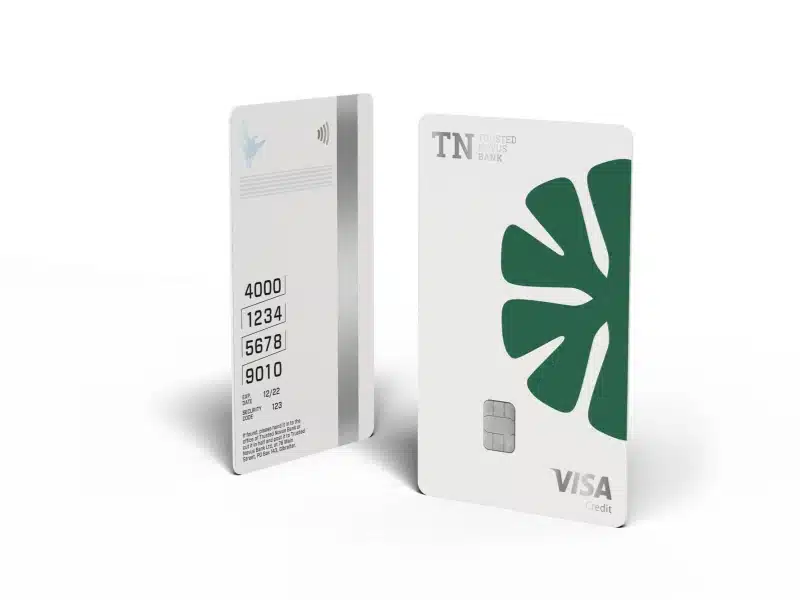
Trusted Novus Bank is a lender worth highlighting because they publish detailed fixed-rate mortgage tables with LTV bands, fees, early repayment charges, and representative examples, which makes it easier for clients to understand the true cost of borrowing rather than focusing only on a headline rate. Their fixed-rate mortgages are shown as available up to a maximum 85% LTV, with 2, 3, or 5-year fixed options. They also provide a clear arrangement fee structure of 0.25% with a minimum of £999, which is the type of detail clients usually want upfront when budgeting.
Where this becomes particularly useful for your content is the inclusion of representative examples and additional fees in pounds. For instance, Trusted Novus includes an example of a £250,000 mortgage over 25 years with an initial fixed rate (example shown at 4.70% for two years in one illustration), including example monthly payments during the fixed period and after reverting to a variable rate. They also show examples of additional costs such as a valuation fee of £570 and legal fees of £1,250 alongside the arrangement fee, which gives buyers a more realistic picture of total upfront costs. As always, these figures are time-sensitive and shown by the bank as correct at the stated date on the product page, but they are extremely helpful benchmarks for buyer education content.
Fixed-rate products are shown as available up to 85% LTV with 2, 3, or 5-year terms.
Arrangement fee is published as 0.25% minimum £999.
Representative examples include clear £ figures, such as a £250,000 mortgage illustration with example monthly payments.
The lender also lists typical add-on costs in £, including £570 valuation fee and £1,250 legal fees in an example.
SG Kleinwort Hambros has historically been positioned more towards private banking and bespoke lending, rather than straightforward “high street style” residential mortgages, so it is best described as a potential option for higher-net-worth borrowers who may need tailored financing structures. Public documentation from Societe Generale Private Banking materials references SG Kleinwort Hambros Bank (Gibraltar) Limited as authorised and regulated by the Gibraltar Financial Services Commission for banking and related business lines. That matters because Gibraltar buyers, especially international buyers, often want reassurance that a provider is properly regulated locally where Gibraltar is involved.
More recently, it is also relevant to note that the SG Kleinwort Hambros brand has been impacted by corporate change, with reporting indicating Union Bancaire Privée (UBP) completed an acquisition of Societe Generale’s UK and Swiss private banking units, including SG Kleinwort Hambros, and that the business has been rebranded as Union Bancaire Privée (UK). UBP itself states it has a presence across the UK, Channel Islands, and Gibraltar, which is useful context if you are explaining why some buyers may encounter “UBP” branding when researching private banking options connected to Gibraltar. For mainstream Gibraltar homebuyers, the practical takeaway is that this is generally a more bespoke, relationship-led route, rather than a simple off-the-shelf mortgage application.
SG Kleinwort Hambros Bank (Gibraltar) Limited is referenced as authorised and regulated by the Gibraltar Financial Services Commission in published materials.


UBP reporting indicates the SG Kleinwort Hambros acquisition and rebrand as Union Bancaire Privée (UK).
UBP states it has a presence across the UK, Channel Islands, and Gibraltar, which supports Gibraltar-linked client servicing.
Best positioned as a bespoke option for complex or high-net-worth cases, rather than the typical residential mortgage route.
When exploring mortgage options in Gibraltar, it is important to understand that not all mortgages are structured the same way. The type of mortgage you choose will influence your deposit requirement, interest rate, repayment flexibility, and long-term financial strategy. Gibraltar lenders typically offer a core range of products similar to those available in the UK, including residential mortgages, first-time buyer products, buy-to-let financing, remortgages, and fixed or variable rate structures. Each serves a different purpose and is assessed under slightly different criteria.
Below is a professional breakdown of the main mortgage types available in Gibraltar and how they typically work.
A residential mortgage is the most common type of home loan and is designed for buyers who intend to live in the property as their primary residence. These mortgages are typically structured over 20 to 35 years, depending on the applicant’s age and lender criteria. Loan-to-value ratios can range from 70% to 90%, depending on residency status, income stability, and deposit strength.
For example, if you purchase a property for £400,000 with a 20% deposit (£80,000), you would require a £320,000 mortgage. At an illustrative rate of 4.75% over 25 years, monthly repayments would be approximately £1,826. Actual rates vary by lender and product.
Residential mortgages are usually the most competitively priced products because the property is owner-occupied, which lenders view as lower risk than investment property.
Designed for primary residences.
Typically available at 70% to 90% LTV depending on profile.
Repayment terms commonly range from 20 to 35 years.
Often offer the most competitive interest rates compared to investment lending.
First-time buyer mortgages are tailored for individuals purchasing their first property. In Gibraltar, some lenders require first-time buyers to be residents with Gibraltar-based income. Deposits may start from 10%, meaning on a £300,000 property, a first-time buyer could need £30,000, subject to lender approval.
These products may include more supportive underwriting, clearer affordability guidance, or options such as guarantor-supported applications. However, buyers must still pass full affordability and credit assessments. Being a first-time buyer does not remove standard lending criteria.
The advantage of first-time buyer products is often improved accessibility and structured support during the application process.
Deposit requirements may begin from 10% for eligible applicants.
Often designed for Gibraltar residents with local income.
Full affordability and credit checks still apply.
May include guarantor options to support borrowing.
Buy-to-let mortgages are designed for investors purchasing property to rent out rather than live in. These are assessed differently from residential mortgages because lenders consider rental income as part of the affordability model.
In Gibraltar, buy-to-let products commonly require higher deposits. Some lenders specify a minimum 50% deposit, meaning on a £500,000 investment property, you may need £250,000 upfront. In addition, rental income is often required to cover at least 145% of the mortgage repayment, providing a buffer for rate changes and potential void periods.
Interest rates on buy-to-let mortgages are generally higher than residential rates because the lender considers them higher risk.
Designed for investment properties.
Typically require larger deposits, often 40% to 50%.
Rental income must exceed repayments by a set margin.
Rates are generally higher than owner-occupied mortgages.
A remortgage involves switching your existing mortgage to a new lender or product, either to secure a better rate, release equity, or change repayment terms. This is common when a fixed-rate period ends and borrowers want to avoid reverting to a lender’s standard variable rate.
For example, if you have an outstanding mortgage of £250,000 and the property is now valued at £400,000, you may have significant equity. A lender may allow you to refinance at 60% LTV, potentially releasing funds for renovation or other investment purposes.
Remortgaging can reduce monthly payments, shorten the mortgage term, or provide capital for other uses, but early repayment charges must be considered carefully.

Used to switch rates or lenders.
Can release equity from property value growth.
Often arranged when fixed-rate periods end.
Early repayment charges may apply.
When choosing a mortgage in Gibraltar, one of the most important decisions you will make is whether to opt for a fixed rate or a variable rate structure. Both options determine how your interest is calculated and, ultimately, how stable or flexible your monthly repayments will be over time. The right choice depends on your risk tolerance, financial stability, and expectations about future interest rate movements.
A fixed-rate mortgage locks your interest rate for a defined period, most commonly 2, 3 or 5 years. During this fixed term, your monthly repayments remain unchanged regardless of movements in base rates or wider market conditions. This provides budgeting certainty and protection from unexpected increases in interest rates. For example, a £300,000 mortgage at 4.8% fixed for five years over 25 years would result in repayments of approximately £1,730 per month, and that figure would remain consistent throughout the fixed period. Fixed-rate products are particularly popular during periods of economic uncertainty or when interest rates are volatile. However, they often include early repayment charges during the fixed term, meaning there may be penalties if you repay or switch the mortgage before the fixed period ends.
By contrast, a variable-rate mortgage fluctuates in line with the lender’s standard variable rate or a referenced benchmark. This means your monthly repayments can rise or fall depending on broader interest rate movements. Variable products may initially start with slightly lower rates than fixed options, which can make them attractive in the short term. However, they carry the risk of increasing repayments if base rates rise. Borrowers considering a variable rate should ensure their affordability calculations allow room for potential rate increases. Some variable products may offer greater flexibility and fewer early repayment penalties, making them suitable for buyers who anticipate selling, refinancing, or repaying early within a shorter timeframe.
Key Differences at a Glance
Fixed rates provide stable, predictable repayments for the agreed term.
Variable rates fluctuate and may result in lower or higher repayments over time.
Fixed mortgages often include early repayment charges during the fixed period.
Variable products may offer more flexibility but carry rate movement risk.
The best option depends on your financial stability, risk appetite, and long-term plans.
The size of your deposit is one of the biggest levers in a Gibraltar mortgage application because it directly determines the loan-to-value ratio (LTV), which is simply the percentage of the property price that the lender is willing to finance. As a rule, the lower the LTV, the lower the lender’s risk, and that tends to translate into stronger mortgage terms, broader product choice, and a smoother approval path.
In Gibraltar, lenders commonly differentiate between residents and non-residents because local income, local banking history, and the practicalities of enforcement make resident lending more straightforward. For non-residents and foreign buyers, it is normal to see deposit expectations in the 20% to 30% range, and sometimes higher depending on income source, currency exposure, credit profile, and the property type. Residents with stable Gibraltar-based income, clean credit history, and good affordability may be able to access higher LTV lending, in some scenarios approaching 90% with a 10% deposit, although this is never guaranteed and often depends on strict affordability checks and the overall strength of the application.
There are also specialist arrangements where higher LTVs may be considered, for example with guarantors or exceptional financial profiles, but these are assessed case by case and usually come with tighter underwriting and additional conditions. Practically speaking, if you can increase your deposit, you often improve not only your rate and acceptance odds, but also your resilience against valuation changes or last-minute lender questions about affordability.
| Buyer profile | Typical deposit range | Typical LTV range | What lenders usually focus on |
|---|---|---|---|
| Gibraltar resident, strong affordability | 10% to 20% | 80% to 90% | Stable income, clean credit, low committed outgoings |
| Gibraltar resident, standard profile | 15% to 25% | 75% to 85% | Income stability, bank conduct, overall affordability |
| Non-resident or foreign buyer | 20% to 40% | 60% to 80% | Deposit strength, income verification, currency risk, credit checks |
| Buy-to-let or investment focused | 25% to 50% | 50% to 75% | Rental coverage, deposit, property demand, void risk |
| Specialist or enhanced terms (guarantor, bespoke cases) | Varies widely | Varies | Strength of guarantor, assets, overall risk profile |
A bigger deposit usually unlocks better terms, more lender options, and faster underwriting decisions.
Non-residents should plan for a higher deposit and more documentation, particularly around income source and savings history.
High LTV mortgages can be possible for strong resident applicants, but affordability and credit quality must be excellent.
Valuations matter, if the lender’s valuation comes in below the purchase price, you may need to increase your deposit to keep the LTV within limits.
If your income is paid in a different currency, lenders may stress-test affordability, which can effectively reduce the maximum loan even with a good deposit.
A successful mortgage application in Gibraltar is rarely about one single factor, it is about presenting a complete, consistent financial picture that gives the lender confidence in three areas: identity, affordability, and risk. Gibraltar lenders tend to be thorough, particularly where applicants are non-resident, self-employed, or paid in a different currency, because they need to verify income stability and ensure repayments remain affordable under realistic stress scenarios. In practical terms, the smoother applications are the ones where the paperwork matches up cleanly, the income is easy to evidence, the deposit funds are clearly sourced, and bank statements show sensible financial conduct without unexplained cash movements. Lenders will also look at the property itself, including location, condition, and valuation, because the property is the security behind the loan. If your documentation is incomplete, inconsistent, or submitted in a piecemeal way, you can expect delays, additional queries, and potentially a reduced loan offer. If you prepare properly, you improve both speed and outcome, because the lender can progress from assessment to valuation and offer with fewer interruptions.
Most Gibraltar lenders start with a baseline eligibility check before they even look at detailed affordability. You will typically need to be over 18 and within the lender’s maximum age at the end of the mortgage term, which is often tied to retirement expectations, although some lenders will consider older applicants where pension or other income is clearly evidenced.
Your residency status matters because it can influence maximum LTV, deposit expectations, and the amount of supporting documentation required. The property must be acceptable security and located in Gibraltar, and lenders will usually require the property to be for legal residential use with clear title. For buy-to-let applications, lenders commonly apply rental stress testing, meaning the rent must exceed the mortgage payment by a set margin, and they may also take a conservative view on likely rent, void periods, and ongoing costs. Expect additional scrutiny if the property is off-plan, unusually configured, or in a development where resale demand could be harder to evidence, as these factors can influence lender risk appetite.
You must meet age and term rules, including end-of-term age limits and retirement income evidence if needed
Residency status can affect maximum borrowing, deposit size, and required documentation depth
The property must be in Gibraltar and acceptable as security after valuation and legal checks
Buy-to-let applicants must pass rental coverage tests and broader affordability checks
Off-plan, complex titles, or non-standard properties may trigger extra underwriting questions
Identity checks are non-negotiable because lenders must comply with anti-money laundering requirements and know-your-customer rules. You will generally be asked for a valid passport and may also provide a Gibraltar ID card or driving licence where applicable. Proof of address is usually evidenced through recent utility bills, bank statements, tax letters, or official government correspondence, often dated within the last three months.
If you have recently moved, or your proof of address is in a different name, you should expect follow-up questions and be ready to provide supporting context, such as a tenancy agreement or a letter from your employer. Non-residents may need to provide proof of address from their home jurisdiction and may be asked for additional certification of documents. A simple way to reduce friction is to ensure all submitted documents are clear, legible, and consistent, with names and addresses matching across the full pack.
Provide a valid passport, plus a secondary ID where requested, such as a driving licence or Gibraltar ID

Submit recent proof of address dated within the lender’s timeframe, commonly within three months
Ensure your name formatting is consistent across documents to avoid avoidable queries
Non-residents may need certified copies and additional address evidence from their home country
Keep scans clean and readable, unclear documents can cause delays even when everything is correct
Income evidence is the backbone of affordability. Employed applicants are typically asked for recent payslips, often three months, and may need a letter of employment confirming salary, contract type, and length of service. Lenders may also look for consistency between your payslips and bank statements, specifically that salary payments land as expected, and that your spending pattern supports the proposed repayment. If you receive bonuses, commission, overtime, allowances, or foreign income, lenders may average these over time, discount them, or request a longer evidence window to confirm reliability.
Self-employed applicants usually face more detailed evidence requirements, such as tax returns, accounts, or accountant certificates over multiple years, and lenders will often focus on sustainable net profit rather than top-line turnover. If you are applying jointly, both applicants will normally need to provide full income evidence, and the lender will then model affordability using combined income and combined commitments.
Employed applicants usually need recent payslips and an employment confirmation letter or contract
Lenders often cross-check payslips against bank statements to confirm income consistency
Variable income like bonuses or commission may be averaged or discounted unless strongly evidenced
Self-employed applicants should expect multi-year tax returns, accounts, and accountant verification
Joint applications require full documentation for both applicants and all combined financial commitments
Lenders use credit checks to understand how you manage borrowing and whether there are any red flags, such as missed payments, defaults, or heavy reliance on short-term credit. Even if you have a strong salary, large existing commitments can reduce affordability because lenders will assess your disposable income after fixed costs. Expect them to review your credit cards, loans, car finance, overdrafts, and any other regular obligations, and they may also ask about childcare costs, maintenance payments, or private school fees if relevant.
A common underwriting principle is that total debt commitments should sit within sensible limits relative to income, and many lenders will apply internal affordability ratios rather than publish a single hard number. If you are a non-resident, the lender may require credit reports from your home country, and in some cases they will rely on banking history and statements more heavily if standard credit data is harder to obtain.
Credit checks are used to assess repayment behaviour, existing debt, and risk indicators

Lenders consider all regular commitments, not just loans, but also lifestyle and fixed household costs
High card utilisation or persistent overdraft use can weaken an application even with good income
Non-residents may need overseas credit reports and more detailed bank conduct evidence
Reducing outstanding debt before applying can materially improve affordability and offer strength
Beyond income, lenders need to understand where the deposit is coming from and whether it is legitimate, stable, and available. This is where many applications slow down, especially when deposit funds come from multiple accounts, overseas transfers, recent asset sales, gifts, or business withdrawals. You may be asked for several months of statements showing savings building over time, plus evidence of the deposit source, such as a completion statement from a property sale, an investment account statement, or a gifted deposit letter with identification for the donor. Lenders can also ask for additional asset and liability detail, particularly where applicants hold substantial investments, own multiple properties, or have income streams that are not straightforward. If your application involves foreign currency income or deposit funds, you may also be asked for supporting statements, exchange records, or proof of transfer routes. The most professional approach is to submit a deposit narrative upfront, a simple written explanation of what the deposit is, where it came from, and which account it will be paid from, matched to statements that evidence the story clearly.
Prepare six months of bank statements as a baseline, more may be requested for complex cases

Evidence deposit source clearly, especially for gifts, overseas funds, investments, or asset sales
Gifted deposits may require donor letters, donor ID, and proof the funds are genuinely a gift
Provide a simple deposit explanation that matches statements, this reduces lender queries dramatically
Expect extra checks where funds move across borders or originate from business accounts or crypto
Practical checklist to submit as a complete pack
Photo ID, plus secondary ID if required
Proof of address, up to date and consistent
Income evidence, plus bank statements showing salary receipts
Deposit evidence and source of funds explanation
Credit and liabilities summary, including loans, cards, and ongoing obligations
Securing a mortgage in Gibraltar is a structured process, but understanding the sequence in advance makes it far more manageable. Whether you are a resident buyer, an expat relocating to the Rock, or a non-resident investor, lenders follow a clear framework focused on affordability, documentation, property suitability, and risk assessment. The key to success is preparation. Buyers who organise their paperwork, understand realistic borrowing limits, and engage early with lenders or brokers typically move through the process more efficiently and with fewer surprises. Below is a professional step-by-step guide outlining the ten essential stages involved in obtaining a mortgage in Gibraltar.
Before approaching any lender, you should conduct a detailed review of your financial circumstances. This includes calculating your gross and net monthly income, identifying fixed financial commitments such as loans or credit cards, and evaluating how much disposable income remains after essential expenses. Gibraltar lenders will stress-test affordability, meaning they will check whether you could still afford repayments if interest rates rise. It is also important to factor in upfront purchase costs beyond the deposit, including stamp duty, legal fees, valuation fees, and mortgage arrangement charges. A realistic internal assessment ensures you target properties within your borrowing range and avoid unnecessary declines or revised offers later in the process.
Calculate your maximum affordable monthly repayment.
Review current debts and ongoing financial obligations.
Budget for stamp duty and legal costs in addition to deposit.
Consider future lifestyle costs and potential rate increases.
Creditworthiness plays a central role in Gibraltar mortgage approvals. Lenders examine repayment history, outstanding borrowing, credit utilisation, and any adverse records such as missed payments or defaults. If you have UK credit history, this will usually be reviewed, and non-residents may need to provide credit reports from their home jurisdiction. Before applying, it is wise to clear small debts, reduce high credit card balances, and correct any errors on your credit file. Avoid taking on new credit commitments in the months leading up to your mortgage application, as this can negatively impact affordability calculations and perceived financial stability.
Obtain and review your credit report in advance.
Clear minor debts where possible.
Avoid new loans or finance agreements before applying.
Ensure no recent missed payments appear on record.
Keep credit card balances proportionally low.
The deposit is not simply about the amount, lenders will also scrutinise where it comes from. Gibraltar banks are subject to strict anti-money laundering regulations and must verify the legitimate origin of funds. Savings accumulated over time are straightforward, but recent large transfers, overseas funds, gifted deposits, or business withdrawals require clear documentary evidence. If your deposit is a gift, the lender may request a signed declaration from the donor confirming it is non-repayable. Preparing a clear explanation supported by bank statements significantly reduces underwriting delays.
Prepare at least six months of savings statements.
Document any recent transfers or asset sales.
Provide donor letters and ID for gifted deposits.
Avoid unexplained cash deposits.
Keep funds in an accessible account before completion.
At this stage, you should engage either directly with a lender such as Gibraltar International Bank, NatWest International, or Trusted Novus Bank, or work with a mortgage broker familiar with the Gibraltar market. Brokers can compare available products and advise on realistic borrowing limits based on your financial profile. They can also explain differences between fixed and variable rates, early repayment charges, arrangement fees, and overall cost of borrowing. For non-residents or complex income cases, broker guidance can be particularly valuable.
Compare products across multiple lenders.
Understand fixed versus variable rate options.
Clarify fees, charges, and repayment structures.
Seek advice tailored to resident or non-resident status.
Request realistic borrowing estimates before property search.
A Mortgage in Principle provides an indication of how much a lender may be willing to lend based on preliminary information. While not legally binding, it strengthens your credibility when making an offer on a property. Estate agents and developers often prefer buyers who have already secured this initial approval. It demonstrates that affordability checks have been undertaken and that you are a serious, financially prepared buyer.
Submit summary income and expenditure details.
Receive indicative borrowing confirmation.
Use this as leverage when negotiating property offers.
Note that final approval depends on full underwriting.
Ensure validity period aligns with property search timeline.
With borrowing limits confirmed, you can begin property viewings. Once you find the right property, submit an offer subject to contract and mortgage approval. At this stage, it is important to ensure the property meets lender criteria. Some lenders may apply stricter rules to off-plan properties, short lease terms, or non-standard constructions. Confirm early that the property type is acceptable to avoid later complications.
Confirm property valuation expectations.
Check lease length and ownership structure.
Ensure property use aligns with mortgage type.
Review service charges and communal obligations.
Agree offer terms subject to financing approval.
After your offer is accepted, the formal application begins. You will submit comprehensive documentation including ID, proof of address, income evidence, bank statements, and deposit verification. This stage involves detailed underwriting, where lenders examine affordability models, employment stability, and financial conduct. Accuracy and completeness at this stage are critical to avoid delays.
Provide all requested documents in one submission.
Ensure figures match across payslips and statements.
Disclose all liabilities honestly.
Respond quickly to follow-up queries.
Maintain financial stability during review period.
The lender appoints a valuer to confirm the property’s market value. If the valuation is lower than the agreed purchase price, the lender may reduce the loan amount, requiring you to increase your deposit. Simultaneously, underwriters complete risk assessments, including stress testing your affordability under potential interest rate increases.
Valuation confirms lender security position.
Low valuations may require deposit adjustments.
Affordability is tested under higher rate scenarios.
Additional documentation may be requested.
Final risk assessment precedes formal approval.
If underwriting is successful, the lender issues a formal mortgage offer outlining loan amount, interest rate, repayment term, fees, and any special conditions. This document is legally significant and should be reviewed carefully alongside your solicitor. Pay close attention to early repayment charges, rate review periods, and total borrowing costs.
Review interest rate and term length.
Check arrangement and valuation fees.
Understand early repayment penalties.
Confirm monthly repayment figure.
Sign and return acceptance documentation promptly.
Your solicitor finalises conveyancing, registers the mortgage charge against the property, and coordinates with the lender for funds transfer. Once funds are released and contracts are completed, ownership transfers to you. At this point, you begin monthly mortgage repayments according to the agreed schedule.
Ensure stamp duty and legal fees are settled.

Confirm insurance is in place before completion.
Register property title and mortgage correctly.
Set up repayment method with lender.
Retain all documentation for records.
Apartments for sale in Gibraltar. We offer a wide range of options, from modern city-centre developments to luxury residences with sea or Rock views.
1 Bed Apartments for Sale – Ideal for first-time buyers, professionals or investors seeking strong rental demand.

2 Bed Apartments for Sale – Perfect for couples, small families or those needing extra space for home working.
3 Bed Apartments for Sale – Spacious options suited to families or buyers looking for premium layouts and larger balconies.
Houses for sale in Gibraltar: We offer a rare opportunity to secure larger living space in one of the Rock’s most desirable residential areas.
2 Bed Houses for Sale – Ideal for couples or small families seeking more space than an apartment.

3 Bed Houses for Sale – Well-suited to growing families needing additional bedrooms and storage.
4 Bed+ Houses for Sale – Premium homes offering expansive layouts, multiple bathrooms and enhanced outdoor space.
Penthouses for sale in Gibraltar represent the pinnacle of luxury living, offering elevated positions, expansive terraces and panoramic views.
2 Bed Penthouses – Stylish upper-floor homes with generous terraces and open-plan living.

3 Bed Penthouses – Spacious layouts perfect for families or buyers seeking premium comfort.
Luxury 4 Bed+ Penthouses – Exceptional residences with expansive terraces, and panoramic views.
Off-plan developments in Gibraltar. We offer buyers the opportunity to secure a property before construction is completed, often at an earlier-stage price point.
Studio & 1 Bed Off-Plan Apartments – Ideal for first-time buyers or investment purchasers targeting rental demand.
2 & 3 Bed Off-Plan Homes – Popular with families and professionals seeking modern living space.
Luxury Off-Plan Penthouses & Premium Units – High-specification residences with prime positioning.
Property For Sale Gibraltar: Our FAQ (Frequently Asked Questions) section is designed to answer the most common questions about mortgages in Gibraltar, from whether you can get a mortgage as a resident, expat, or overseas buyer to how deposits and loan to value ratios work, what interest rate options may be available, and how the application process typically runs from initial checks through to completion.

To apply for a mortgage, lenders will require a clear set of documents to verify your identity, income, affordability, and the source of your deposit. The exact requirements may vary slightly between lenders, but the core documentation is broadly consistent. Preparing these documents in advance helps speed up underwriting and reduces delays once your application is submitted.
Identity and Address
Valid passport or driving licence as photographic identification.
Recent proof of address, such as a utility bill or bank statement dated within the last three months.
In some cases, a second form of identification may be requested.
Proof of Income
Latest three months’ payslips if employed.
Employment contract or letter confirming salary and position.
If self-employed, two to three years of tax returns and business accounts.
Financial Position
Six months of recent bank statements showing income and regular spending.
Details of any existing loans, credit cards, or financial commitments.
Evidence of savings and confirmation of where your deposit funds have come from.
Lenders use this documentation to assess affordability, confirm financial stability, and ensure compliance with regulatory requirements before issuing a formal mortgage offer.
A mortgage broker is a qualified intermediary who helps you secure a mortgage by comparing products across multiple lenders rather than offering loans from a single bank. Instead of applying directly to one institution, a broker reviews your income, deposit, credit profile, and property goals, then identifies which lenders are most likely to approve your application and on what terms. In Gibraltar, where criteria can vary depending on residency status, employment type, and loan-to-value ratio, a broker can add real value by understanding which banks are more flexible in specific scenarios. Brokers also assist with packaging your application correctly, ensuring documentation is complete, and managing communication with the lender during underwriting. Some brokers charge a client fee, which may range from a few hundred pounds to around 1% of the loan amount, while others are paid commission by the lender upon completion.
Brokers compare multiple lenders rather than offering one bank’s products.
They assess affordability and match you to suitable mortgage options.
Particularly helpful for non-residents, self-employed, or buy-to-let cases.
May charge a fee or receive commission from the lender.
Can streamline paperwork and reduce delays during underwriting.
No, you are not required to go directly to a bank to obtain a mortgage. You can choose to approach a mortage broker yourself, such as a local or international bank operating in the market, and apply directly for one of their mortgage products. However, doing so limits you to that bank’s criteria, interest rates, and loan structures. If your application does not fit their risk profile, you may need to start the process again elsewhere. Alternatively, using a mortgage broker allows you to explore several lender options simultaneously, which can save time and provide broader comparison of rates, fees, and loan-to-value options. Ultimately, both routes are valid. The right choice depends on whether you prefer direct engagement with a single lender or a wider market comparison approach.
You can apply directly with a bank if you prefer.
Going direct limits you to that lender’s mortgage range.
A broker offers wider comparison across multiple providers.
Direct applications may suit straightforward resident cases.
Brokers are often beneficial where circumstances are complex.
Mortgage brokers in Gibraltar can charge in a few different ways, and understanding this helps you decide whether using one offers good value for your situation. Brokers act as intermediaries between you and lenders, helping you find the best products, preparing your application, and often handling communication with the bank throughout the approval process. Because this service adds expertise and convenience, brokers usually receive payment either directly from you, from the lender, or a combination of both. The exact arrangement should always be disclosed up front before you engage a broker formally.
In many cases, brokers charge a one-off fee for their advice and service. This fee can vary depending on the complexity of your case, the size of the mortgage, and the level of support you need. Typical broker fees range from around £500 to £1,500 for standard residential applications; for more complex scenarios, such as buy-to-let lending, overseas income, or self-employed applicants, fees can be higher. Some brokers charge a percentage of the loan amount, commonly around 0.5% to 1% of the mortgage value. On a £300,000 mortgage, that would equate to £1,500 to £3,000 in broker fees if charged as a percentage.
Alternatively, many brokers are paid a commission by the lender upon successful completion of the mortgage. This means you may not pay a direct fee, but the broker receives a payment from the bank for introducing the business. Even when a broker is paid by the lender, reputable intermediaries should still be transparent about this arrangement and confirm whether any additional fee applies from your side.
Summary of Typical Broker Charges
Up-front fee: Often around £500 to £1,500 for straightforward residential cases.
Percentage fee: Around 0.5% to 1% of loan amount in some cases (e.g. £1,500 to £3,000 on a £300,000 mortgage).
Lender commission: Some brokers receive payment from the lender instead of, or in addition to, client fees.
Combined fee arrangements: Occasionally brokers may agree a reduced client fee plus commission.
No surprise fees: A reputable broker should disclose all fees before you proceed.
Yes. In addition to working with traditional mortgage lenders and independent mortgage brokers, we can also engage with specialist finance companies where a more tailored solution is required. This is particularly relevant in Gibraltar where some cases fall outside standard high street lending criteria, such as complex income structures, self-employed applicants, investment purchases, equity release, bridging finance, or second charge lending.
Traditional banks tend to operate within clearly defined underwriting rules around loan-to-value ratios, income multiples, and credit history. Finance companies, by contrast, may offer more flexible structures, shorter-term funding, or specialist products designed for property investors, developers, or borrowers needing faster completion. For example, bridging finance can sometimes be arranged within weeks rather than the 4 to 6 week timeframe typical of a standard residential mortgage, although rates are usually higher to reflect the short-term nature of the loan.
Working with both banks and specialist finance providers means we can assess the full picture before recommending a route. In some situations, a standard residential mortgage will provide the most cost-effective solution. In others, a structured property loan, second charge mortgage, or short-term facility may be more appropriate, particularly where timing or complexity is a factor.
What This Means for You
Access to both traditional banks and specialist finance providers.
Broader lending options for complex or non-standard cases.
Ability to structure second mortgages, property loans, and refinancing solutions.
Clear comparison between cost, flexibility, and speed of funding.
Transparent explanation of fees, rates, and long-term implications before you proceed.
A mortgage lender is a bank or financial institution that provides the actual funds used to purchase a property. When you take out a mortgage, the lender lends you the money required to buy the property, and in return, they register a legal charge against it. This means the property acts as security for the loan until it is fully repaid.
In simple terms, the lender is the organisation that provides the capital. They assess your application, carry out affordability checks, review your credit history, value the property, set the interest rate, and determine the repayment terms. If your application is approved, the lender transfers the mortgage funds to your solicitor at completion, allowing the property purchase to proceed.
Mortgage lenders can include high street banks, international banks, or specialist finance providers. Each lender has its own criteria relating to income, deposit size, loan-to-value limits, age restrictions, and acceptable property types. For example, one lender may offer up to 80% loan-to-value for residents, while another may cap lending at 70% for non-residents.
It is important to understand that a mortgage lender is different from a mortgage broker. The lender provides the money, while a broker helps you find and apply for the right lender’s product.
Key Points to Remember
A mortgage lender provides the funds to purchase the property.
The property is used as security for the loan.
The lender sets the interest rate and repayment terms.
Lenders assess affordability, credit history, and property value.
A broker introduces you to lenders, but does not lend the money themselves.
Yes, professional mortgage advisers can assist not only with standard residential mortgages, but also with property loans and second mortgages, depending on your circumstances and objectives. These types of lending are commonly used by homeowners who already own property in Gibraltar and want to access additional funds without selling their home. Whether you are looking to release equity for renovations, consolidate higher-interest debt, invest in another property, or support a business venture, structured property lending solutions may be available.
A second mortgage, also known as a second charge loan, allows you to borrow additional funds secured against your existing property while keeping your original mortgage in place. This means your first lender remains in position, and a second lender takes a secondary charge. The amount you can borrow will depend on the equity in your property and your affordability. For example, if your property is valued at £600,000 and your existing mortgage balance is £300,000, you may have up to £300,000 in equity. A lender may allow you to borrow a portion of that equity, subject to affordability and overall loan-to-value limits.
A property loan can refer more broadly to borrowing secured against property, which may include remortgaging to release equity, bridging finance for short-term needs, or structured lending for investment purchases. Interest rates on second mortgages are often higher than first charge mortgages because the lender takes on additional risk, and affordability assessments remain strict. Lenders will review your income, commitments, credit history, and the current value of the property before approving additional borrowing.
Key Points to Consider
Second mortgages allow you to raise funds without replacing your existing mortgage.

Equity is calculated as property value minus current mortgage balance.
Interest rates on second charge loans are usually higher than standard mortgages.
Affordability and credit checks still apply.
Remortgaging may sometimes be cheaper than taking a second mortgage, depending on your rate and early repayment charges.
In Gibraltar, the amount you can borrow is primarily driven by affordability, not just the property price. Lenders typically assess your application by reviewing your income, committed monthly outgoings, and overall financial conduct, then applying internal affordability models and stress tests. As a practical rule of thumb, many buyers find borrowing often sits around 3.5 to 4.5 times annual income, but the final figure depends on your commitments and the lender’s assessment of risk. For example, if a household earns £140,000 per year, an indicative borrowing range might fall between £490,000 and £630,000, assuming minimal debts and stable employment. Lenders will also factor in fixed costs like loans, credit cards, car finance, childcare, and any ongoing obligations, because these reduce your available monthly surplus. Gibraltar-focused guidance also notes that lenders typically prefer a credit score around 650+, and a stronger profile can make approvals and terms more achievable.
Indicative borrowing is often discussed as 3.5 to 4.5 times annual income, but affordability is the final decider.
Existing commitments reduce borrowing power, even where income is strong.
A credit score around 650+ is commonly referenced as preferred by lenders.
Deposit requirement in Gibraltar usually depends on whether you are buying as a resident, non-resident, or investor. Market guidance commonly points to 20% to 30% deposits for non-residents, which equates to 70% to 80% LTV, while residents may access higher LTV options depending on profile and lender appetite. For a simple illustration, on a £500,000 property, a 20% deposit is £100,000, and a 30% deposit is £150,000. For buy-to-let, deposit expectations are typically higher. Gibraltar International Bank, for example, states a minimum 50% deposit for buy-to-let and requires rental income to cover at least 145% of the mortgage repayment. Higher deposits can also improve product choice and reduce the risk of issues if the lender valuation comes in lower than the agreed purchase price.
Non-resident deposits are commonly quoted at 20% to 30%.
£500,000 purchase example: £100,000 (20%) or £150,000 (30%) deposit.
Buy-to-let example: minimum 50% deposit and 145% rental coverage stated by GIB.
Larger deposits generally improve lender confidence and may support better terms.
Yes, Gibraltar mortgages are available to residents and, in many cases, to non-residents and expats, but terms vary. Gibraltar guidance aimed at buyers commonly notes that non-residents can obtain mortgages, though lenders usually require a larger deposit, and may cap LTV more conservatively than for residents. As a broad example, resident buyers may access up to around 80% LTV, whereas non-residents are often limited closer to 70% LTV, depending on lender and profile. Lenders will typically take a more cautious approach where income is overseas, where there is currency exposure, or where credit data is harder to verify. Practically, non-resident applicants should expect additional checks, more documentation, and a greater focus on deposit strength and the traceability of funds.
Non-residents can apply, but deposit and LTV expectations are usually stricter.
Guidance commonly references residents accessing up to 80% LTV, with non-residents often closer to 70%.
Overseas income can trigger deeper verification and risk assessment.
A strong, traceable deposit is especially important for expats and foreign buyers.
Most Gibraltar lenders will ask for a complete pack that proves identity, address, affordability, and source of deposit funds. Typical documentation includes valid photo ID, proof of address, evidence of income, and a run of bank statements to show salary credits and general account conduct. Gibraltar International Bank’s buy-to-let guidance is especially clear and lists items such as 3 months’ payslips, an employment contract or tax returns, 6 months’ bank statements for all active accounts, and proof of savings and rental income evidence where relevant. Property details are also needed, such as the purchase agreement and address, because lenders must assess the property as security and instruct a valuation as part of underwriting. Submitting documents in one clean, consistent bundle is one of the simplest ways to reduce delays.
Photo ID and proof of address are standard starting requirements.
Income evidence often includes 3 months’ payslips and contract or tax returns (self-employed).
6 months’ bank statements are commonly requested, especially for active accounts.
Deposit proof and, where applicable, rental income evidence for buy-to-let.
A typical Gibraltar mortgage timeline is often quoted at around 4 to 6 weeks from full submission to approval, assuming documentation is complete and valuation and legal steps run smoothly. Gibraltar property guidance aimed at buyers frequently references this 4 to 6 week window, noting that delays usually come from incomplete paperwork, follow-up questions on deposit source, valuation timing, or conveyancing progress. If you organise your documentation early, respond quickly to underwriting questions, and instruct a solicitor promptly, you can often avoid unnecessary back-and-forth. It is also worth remembering that lenders will not usually move to final approval until the valuation has been completed and reviewed, so building in some breathing space around surveyor availability is sensible.
Mortgage approval is commonly quoted at 4 to 6 weeks, depending on documentation and valuation.
A well-prepared document pack is one of the biggest speed drivers.
Valuation timing and legal conveyancing often influence the overall timeline.
Quick responses to lender queries can materially reduce delays.
In Gibraltar, as in the UK, mortgage interest rates generally fall into three main categories: fixed, variable, and tracker rates. Each option has different implications for stability, cost and risk, and the correct choice depends on your personal circumstances, financial risk appetite and expectations for future interest rate movements.
Fixed Rate Mortgages: The interest rate is locked in for a set period (commonly 2, 3 or 5 years), meaning monthly repayments will stay the same during that period regardless of market movements. This provides payment certainty, making budgeting easier. For example, a 5-year fixed rate might be around 4.50% to 5.20% (depending on lender and profile), so a £300,000 loan at 4.8% over 25 years would have monthly repayments of approximately £1,698.
Variable Rate Mortgages: These move with the lender’s standard variable rate (SVR) and can go up or down with market conditions. They often start lower than fixed rates but can increase without warning, making budgeting less predictable.
Tracker Rate Mortgages: These are linked to an external benchmark such as the European or UK base rate plus a fixed margin (for example, ECB + 2%). They provide transparency because you know the margin, but like variable rates, payments can rise if the benchmark increases.
Choosing the best option depends on your tolerance for rate changes, likelihood of moving property within a fixed period, and whether stability or potential savings is more important to you.
Fixed rates provide payment certainty over the selected term.
Variable and tracker rates can result in lower initial payments but carry rate risk.
Your choice should align with your budget stability needs and economic outlook.
Early repayment charges and exit fees differ between product types and must be considered.
Yes. Nearly all Gibraltar lenders will perform a credit check as part of their underwriting process. This enables them to see your repayment history, existing credit commitments, defaults, arrears and overall financial behaviour. A strong credit history increases your chance of approval and more favourable terms, while a weak or limited history may reduce options or lead to higher deposit requirements.
If your credit report shows issues such as missed payments, defaults, or high credit utilisation, lenders may take a more conservative view, requiring larger deposits, additional affordability buffers, or in some cases declining the application until credit improves. It is a common misconception that a perfect score is required, but lenders do look for consistency, responsible repayment behaviour, and evidence that debt obligations are managed well relative to income.
Credit checks are standard and inform lender risk assessments.
Adverse credit history may require larger deposit or stronger income evidence.
High debt levels relative to income can reduce borrowing capacity.
Overseas credit reports may be requested for non-resident applicants.
Yes, you can apply for a Mortgage in Principle, also called an Agreement in Principle or Decision in Principle, before you make an offer on a property, and it is one of the smartest early steps you can take. Think of it as a lender’s provisional view of what you may be able to borrow, based on the information you provide about income, outgoings, existing credit commitments, and your deposit position. It is not a binding offer and it is not a guarantee of funding, because the lender still needs to complete full underwriting, verify documents, and value the specific property you intend to buy. Even so, it carries real weight in the Gibraltar market because it signals to estate agents, developers, and sellers that you have already been through an initial affordability assessment and you are in a credible position to proceed.
That can help you move faster, reduce negotiation friction, and in some cases strengthen your offer against competing buyers who have not done the groundwork. It also gives you a clearer financial boundary while viewing properties, which helps prevent wasted time and disappointment later, particularly in a market where desirable homes can attract attention quickly.
In practical terms, an Agreement in Principle typically lasts around 30 to 90 days, depending on the lender’s policy, and it will state an indicative maximum loan amount. The lender may carry out a light assessment at this stage, sometimes including a soft credit check, and they will usually base the decision on the information you submit, so accuracy matters. If your circumstances change after it is issued, for example a job change, new credit commitments, a reduced deposit, or large unexplained transactions in your bank statements, the lender may revise the amount when you move to full application. Once you have an offer accepted on a property, the next step is a full mortgage application, where you will supply supporting documents, the lender will complete detailed underwriting, and a valuation will be instructed. If your Agreement in Principle expires before you find the right property, you should renew it promptly so you remain “finance-ready” and can act quickly when you need to.
An Agreement in Principle helps you shop within a realistic budget and reduces the risk of falling in love with an unaffordable property.
It strengthens your position with agents and sellers because it shows affordability has already been considered.
Most are valid for 30 to 90 days, and you should renew if it expires before you secure a property.
It is not a guarantee, final approval still depends on full checks, document verification, and a property valuation.
Keeping your finances stable after issue, and avoiding new debt, improves the chance that the final offer matches the initial indication.

Yes, it may still be possible to obtain a mortgage with bad credit, but approval will depend on the severity, age, and frequency of the issues on your credit record. Lenders assess risk carefully, and while minor missed payments from several years ago may have limited impact, more recent defaults, County Court Judgments, or high levels of unsecured debt can reduce your options. In Gibraltar, as in the UK, lenders focus on overall affordability, deposit strength, and financial stability alongside credit history. A larger deposit can significantly improve your chances, as it reduces the lender’s exposure and lowers the loan-to-value ratio. In some cases, specialist lenders or structured lending solutions may be considered where high street criteria cannot be met.
It is important to be transparent about your credit history from the outset. Attempting to hide issues will almost certainly lead to delays or decline once checks are completed. Improving your credit position before applying, such as reducing credit card balances, clearing outstanding defaults, or demonstrating a period of stable repayment behaviour, can materially strengthen your application.
Minor historic credit issues may still be acceptable to some lenders.
Larger deposits can improve approval chances where credit is weaker.
defaults or CCJs significantly reduce mainstream lender options.
Specialist lending routes may be available depending on circumstances.
Improving credit conduct before applying can enhance your prospects.
Owning a home is a keystone of wealth… both financial affluence and emotional security.
Suze Orman